Blog by Santiago McLaughlin
The Key of Topics
Click on link to understand the topic
- The Key of Topics
- Intro: What is a concussion:
- Timeline of Concussion Research
- Brain Basics and Concussion Impact
- Sensation and Perception
- My Story
- Bibliography:
Intro: What is a concussion:
According to the CDC: “A concussion is a type of traumatic brain injury—or TBI—caused by a bump, blow, or jolt to the head or by a hit to the body that causes the head and brain to move rapidly back and forth. This sudden movement can cause the brain to bounce around or twist in the skull, creating chemical changes in the brain and sometimes stretching and damaging brain cells.”
In the blog I will be looking at the progressive impact of concussion and how they relate to the elementary modules of psychology and my Story within it all.
Timeline of Concussion Research
1870: James Crichton-Browne chronicles the dangers of repeated head injuries, advising that those who suffer a concussion should avoid subsequent head trauma.
1928: Pathologist Harrison Martland publishes a paper using the boxing vernacular “punch drunk” to describe the chronic neurodegenerative condition observed in fighters, introducing the concept of cumulative sports head trauma to the scientific community.
1940s: Seminal early research on concussive and subconcussive brain trauma is carried out at Boston City Hospital by researchers like Derek Denny-Brown.
1952: Harvard physician Augustus Thorndike formally proposes that suffering three concussions in a collision sport should be grounds for medical retirement from that sport.
1975: Researchers Gronwall and Wrightson suggest that the effects of concussions are cumulative and that sporting authorities need to address the long-term impact.
1982: The NCAA establishes the Injury Surveillance System to officially track injury trends, including concussions, in collegiate sports.
1994: The NFL creates the Mild Traumatic Brain Injury (MTBI) Committee, though it is initially criticized for downplaying the long-term risks and severity of football-related concussions. The NCAA officially adopts guidelines outlining protocols for returning to play after a concussion.
2000: The University of Pittsburgh Medical Center (UPMC) establishes the first free-standing concussion program in the U.S. and aids in the widespread rollout of ImPACT, a computerized neurocognitive test to evaluate baseline brain function and track recovery.
2001: The First International Congress on Sports Concussion is held in Vienna, producing a standardized, modern medical definition for concussions and making neuropsychological testing a cornerstone of management.
2002: Pathologist Dr. Bennet Omalu examines the brain of deceased NFL Hall of Famer Mike Webster. He discovers severe protein accumulations and brain damage, formally naming the condition Chronic Traumatic Encephalopathy (CTE).
2003: “The NCAA Concussion Study” by Kevin Guskiewicz and Michael McCrea is published in the Journal of the American Medical Association (JAMA). Tracking over 4,200 player-seasons, it becomes a foundational study for modern sports concussion protocols.
2006: UPMC researchers receive millions in CDC and NIH grants to correlate functional MRI scans with cognitive testing and to develop pediatric-specific testing tools.
2014: The NCAA and the U.S. Department of Defense launch the Concussion Assessment, Research and Education (CARE) Consortium. As the largest longitudinal concussion study in history, it tracks over 50,000 athletes and cadets to analyze the neurobiology, biomarkers, and long-term trajectory of mild traumatic brain injuries.
Brain Basics and Concussion Impact
The Central Nervous System:
The central nervous system (CNS) consists of the brain and the spinal cord. It serves as the ultimate control center, regulating our internal world while processing contact with the outside world.
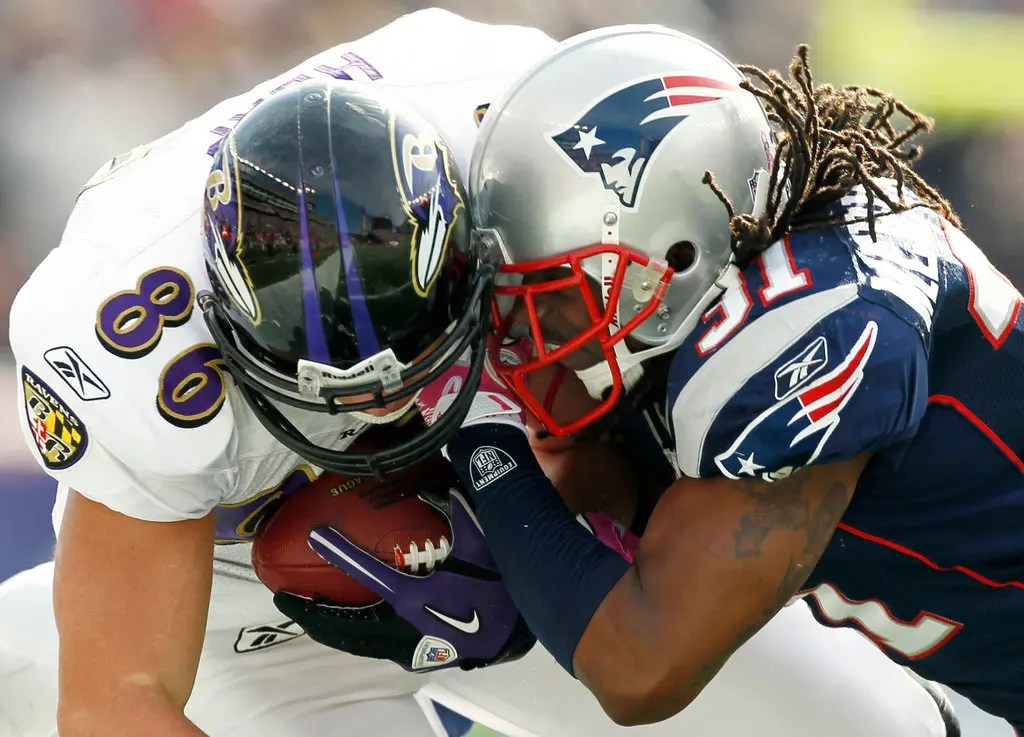
Many contact sports, particularly American football, involve repetitive physical collisions that place immense strain on the CNS Over time, concussions and constant head injuries can physically deteriorate the brain and its overall function. When an athlete suffers a hit, standard first aid protocols dictate immediately stopping activity, not just to assess for external trauma, but to protect this vital central control system from compounding damage
Many contact sports, particularly American football, involve repetitive physical collisions that place immense strain on the CNS Over time, concussions and constant head injuries can physically deteriorate the brain and its overall function. When an athlete suffers a hit, standard first aid protocols dictate immediately stopping activity, not just to assess for external trauma, but to protect this vital central control system from compounding damage
Neurons, Myelin, and Micro-Trauma:
The brain is powered by approximately 100 billion neurons, which act as the fundamental building blocks of the CNS. When looking at the structure of a single neuron, two main components dictate how well an athlete processes the game
Dendrites: The branches responsible for receiving and relaying incoming information.
Axons: The long cables responsible for transmitting that information outward.
Crucially, these axons are insulated by the myelin sheath, a fatty material composed of glial cells that ensures information is transmitted at high speeds.
To truly understand how critical intact myelin is to an athlete’s physical performance, we can look at diseases like Multiple Sclerosis (MS). MS causes severe demyelination, leading to a loss of physical sensitivity, muscle spasms, and severe difficulties with coordination and balance. While a concussion is a different mechanism of injury, the severe impairment seen in MS illustrates exactly what happens when the brain’s “wiring” is damaged: performance drops, and physical function deteriorates.
Plasticity
The silver lining in concussion research lies in the concept of plasticity. Plasticity is the mechanism by which we learn new information, but it is also how the brain adapts and recovers from damage. While the physical deterioration from repetitive impacts is a serious medical reality, the brain’s inherent ability to rewire itself is what makes proper recovery protocols, like resting the CNS and avoiding subsequent hits, so vital to an athlete’s long-term health and psychological well-being.
Sensation and Perception
My Story
Having played contact sports my whole life and at competitive levels it was almost a guarantee to have been in vulnerable situations to concussions. However, across my athletic career I generally avoided major head injuries until my senior year of high school where my situation compounded. Across my senior year I sustained two concussions as seen in the videos below, and I don’t believe the compounding nature of my injuries were any coincidence. I perhaps wasn’t fully recovered from my first concussion only one month after. I was a senior in high school stressing about what school I would go to, saying goodbye to my friends, prom, leaving home, final exams that I could have taken a more sensitive approach to recovery. However this is the dilemma many athletes face. There will only be so many opportunities to play for your high school or competitively in general and many, like me, feel that Normative Social Influence discussed in the Social Psychology section.
Bibliography:
Timeline of concussion research:
“A Historical Perspective on Sports Concussion: Where We Have Been and Where We Are Going” (National Library of Medicine / PubMed, 2016)
“History of Concussion Including Contributions of 1940s Boston City Hospital Researchers” (National Library of Medicine / PubMed, 2019)
“A Brief History of Concussion as a Public Health Issue” (Concussion Alliance)
“Timeline: The NFL’s Concussion Crisis” (PBS Frontline: League of Denial, 2013)
“Sports Medicine Concussion Program Timeline” (University of Pittsburgh Medical Center)
“World’s largest concussion study marks 10 years” (Indiana University School of Medicine, 2024)
Image Links:

 Santiago McLaughlin's blog about his interests
Leave a reply to Hello World! – storyofconcussionandpsychology Cancel reply